Vinyl siding is fast becoming one of the most popular siding materials for homeowners. One of the first, and most important, steps when installing it is cutting the material to size — something that can feel genuinely tricky the first time you attempt it.
The good news is that cutting vinyl siding is very manageable once you know a little about the material and have the right tools on hand. After reading this guide, you should feel considerably more comfortable and capable of handling the cutting portion of a full siding installation yourself.
In this guide
- How to Cut Vinyl Siding?
- What Do You Cut Vinyl Siding With?
- What Is The Best Way To Cut Vinyl Siding?
- Can You Cut Vinyl Siding With A Miter Saw?
- How To Cut Vinyl Siding With A Miter Saw?
- Best Miter Saw Blade For Vinyl Siding
- Best Tools To Cut Vinyl Siding
- Best Blade To Cut Vinyl Siding
- Best Circular Saw Blade To Cut Vinyl Siding
- Best Saw Blade For Vinyl Siding
- Best Grinder Blade For Vinyl Siding
How to Cut Vinyl Siding?
Vinyl siding's biggest selling points are its low cost, long service life, and minimal ongoing maintenance. Another reason it's such a popular choice is how approachable it is to install — plenty of homeowners handle the entire job themselves without hiring a professional.
If you're installing siding yourself, you'll need to know how to cut it to fit your home's dimensions. It's genuinely simple and only requires a handful of tools. Below is a walkthrough of how to make clean, accurate cuts in vinyl siding.
Materials you'll need to cut vinyl siding
· Circular saw
· Tin snips
· Utility knife (for horizontal cuts)
· Safety glasses
· Carpenter's square
· Straightedge
· Tape measure
· Vinyl siding panels
Which of these tools you reach for mainly depends on the type and length of cut you're making, along with how many individual panels you actually need to cut to the exact same size. Here's a quick overview of the three main cutting scenarios, with full step-by-step instructions for each further down this guide:
- Short vertical cuts — best handled with a circular saw fitted with a fine-toothed plywood blade.
- Long vertical cuts — tin snips (essentially heavy-duty metal shears) tend to give the cleanest, most controllable result.
- Horizontal cuts — a standard utility knife, used to score and snap the vinyl, is usually easier to manage than snips over a long horizontal run.
Always measure twice with a tape measure and mark your cut line on the underside of the panel (the side that won't be visible once installed), so any marker residue stays hidden after installation.
What Do You Cut Vinyl Siding With?
The right blade for the job depends on what you're cutting and how thick the specific siding panel is — even the best vinyl-rated blade will underperform if it's mismatched to the panel's thickness. As a general rule, a sharp, fine-toothed blade works best on thinner vinyl siding, while a blade with a deeper gullet (more space between teeth to clear material) tends to handle thicker panels more cleanly.
What Is The Best Way To Cut Vinyl Siding?
The best method really depends on the specific cut you need to make. As a rule of thumb: a circular saw is the fastest, smoothest option for short vertical cuts across multiple panels at once; tin snips are the simplest tool for longer vertical cuts; and a utility knife gives you the most control for horizontal cuts along a panel's length.
Circular saw
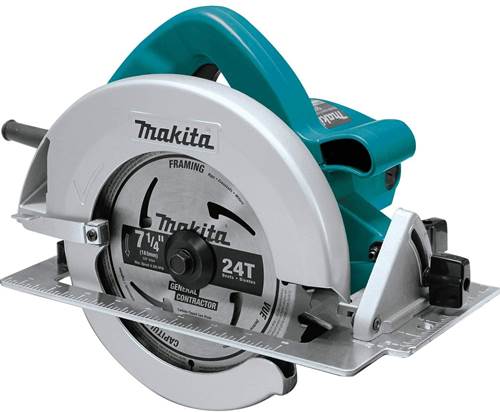
1. Fit your circular saw with a fine-toothed blade meant for cutting plywood, and install it reversed (backward) from its usual orientation — this is a genuine, widely used trick for vinyl specifically, since it lets the teeth melt and fuse the cut edge slightly rather than chipping or tearing the brittle material. Put on safety glasses before you start.
2. Lay the siding panel flat on a worktable, lining up your marked cut line with the edge of the table so the section you're removing hangs just past the table's edge.
3. Hold the panel firmly in place with one hand, and guide the saw slowly along the table's edge with the other, using the table itself as your straightedge guide. Repeat for each additional panel you need to cut to the same length.
Tin snips
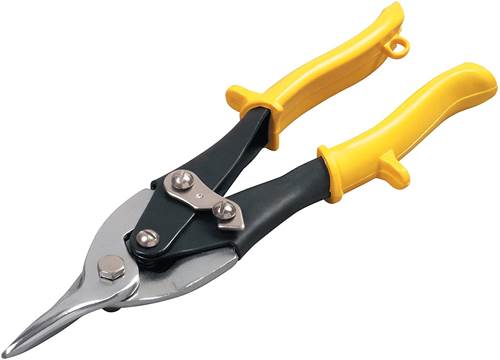
1. Lay the panel on your worktable and align your marked cut line with the table's edge. Slide a carpenter's square underneath the siding, positioned at a true 90 degrees to the table's edge, to help you keep the cut straight.
2. Hold the siding and worktable steady with one hand, and begin cutting along your line with the tin snips in the other. Keep the snips only about two-thirds closed as you cut, rather than closing them all the way with each pass.
3. If a single pass doesn't cut all the way through, reopen the snips and advance them slightly further along the line, repeating as needed until the panel separates cleanly. Avoiding a full, hard close on each snip helps keep the cut edge smooth rather than crushed or jagged.
Utility knife
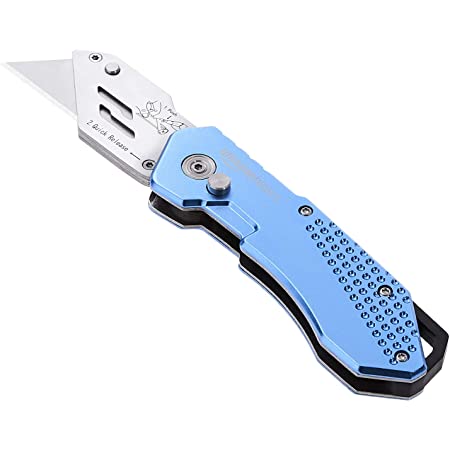
1. Lay the panel face-down on your worktable, and position a straightedge along your marked cut line.
2. Run the utility knife along the straightedge using moderate, even pressure — you're aiming to score the vinyl, not cut all the way through it in one pass.
3. Once scored, fold the panel along the scored line. If it doesn't snap cleanly on the first fold, gently flex it back and forth along the score line until it separates.
Can You Cut Vinyl Siding With A Miter Saw?

Yes — cutting vinyl siding with a miter saw is a genuinely solid option. Since a miter saw can be angled in multiple directions, it makes tricky angled cuts, like those needed around corners or trim, considerably more manageable than a straight circular saw cut.
Whichever saw you use, make sure it's fitted with a fine-toothed blade to get the cleanest possible cut. Beyond a miter saw, other tools that work well for cutting vinyl siding include a chop saw, a jigsaw, and a rotary (reciprocating) saw.
How To Cut Vinyl Siding With A Miter Saw?
As with a standalone circular saw, a miter saw blade installed in reverse tends to give you the cleanest, most consistent result on vinyl. Here's how to approach it:
1. Fit a plywood-cutting blade to your miter saw and mount it backward, the same way you would on a standalone circular saw, table saw, or handheld circular saw.
2. Mark your cut line directly on the siding, then feed the blade gradually into the material along that line. Running the blade in reverse causes the cut edges to melt and fuse very slightly as they're cut, leaving a smooth edge with no chipping or jagged indentations. A blade rated around 36 TPI (teeth per inch) is generally a solid, versatile choice for this kind of cut.
A miter saw set up this way is especially useful when you're fitting siding around doors, windows, and other trim details, since it lets you dial in precise angles rather than relying on a straight cut alone. If you're using a jigsaw instead and end up with slightly serrated or rough edges, smoothing them afterward with 220-grit sandpaper works well.
If you're working with a hand-operated hacksaw rather than a powered saw, fit it with a fine-toothed blade rated around 32 TPI — a hacksaw with fine teeth like this can still slice through vinyl siding cleanly, just with more manual effort than a powered saw. As with a jigsaw cut, smooth over any rough edges afterward with 220-grit sandpaper.
Best Miter Saw Blade For Vinyl Siding

Black abrasive cutting blades (whether rated for masonry or steel) work surprisingly well for cutting vinyl siding on a miter saw. As a solid default, an 80-to-100-tooth fine finish blade sized for a 10-inch saw is a good general choice, with an equivalent tooth count available for 12-inch saws too.
Some professionals get good results with a standard plywood blade or even a masonry blade — in practice, you can use whichever tooth style you find most comfortable to work with. The main rule to keep in mind is that fewer teeth generally means more chipping and a rougher edge, while more teeth give you a cleaner, smoother cut. A blade rated around 36 TPI (teeth per inch) tends to be more than adequate for a clean cut through most vinyl siding panels.
Best Tools To Cut Vinyl Siding
The tools needed for this kind of project are genuinely simple, and you have a choice between hand tools and power tools depending on your comfort level and what you already own. Which specific tool works "best" often comes down to personal preference as much as anything else.
A sharp utility knife is generally the go-to tool for cutting vinyl siding along the length of a panel, since it's cheap, widely available, and easy to control. If you only need to make a handful of lengthwise cuts, tin snips or a basic hand saw will get the job done without needing to bring out a power tool at all. For short vertical cuts specifically, a circular saw remains the fastest and most efficient option, especially if you're cutting several panels to the same length.
Best Blade To Cut Vinyl Siding
Vinyl siding can generally be cut much like wood, but the blade choice matters more than you'd expect. A circular saw fitted with a PVC-rated blade, or a sharp, straight carbide-tipped blade with small, fine teeth, tends to give the best results. A blade meant for rough cuts through wood logs, by contrast, can easily crack or shatter vinyl siding instead of cutting it cleanly.
This risk is especially pronounced when the vinyl itself is cold, since vinyl becomes noticeably more brittle in low temperatures — it's generally worth avoiding cutting vinyl siding outdoors on a genuinely cold day if you can help it, or at least handling it extra carefully and expecting a higher chance of cracking if you do. Letting panels warm up indoors for a while before cutting, even just to room temperature, can make a genuinely noticeable difference in how cleanly they cut.
Best Circular Saw Blade To Cut Vinyl Siding
Most circular saws handle vinyl siding well with a fine, small-toothed blade, mounted backward on the saw for the cleanest possible cut — a technique worth repeating here since it's genuinely the single biggest factor in how clean your cut edge turns out.
Put on safety glasses first, then mark the exact spot you want to cut directly on the siding. Use the edge of your worktable as a straight guide, and cut slowly and steadily along that line rather than rushing the pass — vinyl responds much better to a slow, controlled cut than a fast, forceful one.
Best Saw Blade For Vinyl Siding
Cutting through vinyl siding, laminate, or plastic-coated composite panels is generally trickier than cutting plain wood, since these materials tend to chip or crack rather than cut cleanly under the wrong blade. In most cases, what you actually need is a carbide-tipped blade with a tooth profile specifically designed to handle that kind of material without chipping it.
The Diablo D0740R is one commonly recommended blade for this kind of job, since it carries enough teeth to leave a smooth, clean cross-section on vinyl and similar materials. It's also designed to handle both rip cuts (along the length of a panel) and crosscuts (across it) reasonably well, striking a middle ground between the two rather than being optimized purely for one or the other, which makes it a genuinely convenient single-blade option if you don't want to swap blades between different cut types mid-project. Blades built this way are designed to leave a smooth edge straight off the saw, with little to no sanding or planing needed afterward — a real time-saver on a project involving dozens of individual cuts.
Best Grinder Blade For Vinyl Siding
Using an angle grinder on vinyl siding tends to melt the material and gum up whatever blade or wheel you're using, so if you do want to use a grinder, a diamond wheel is genuinely your best option — the same continuous-rim diamond wheels commonly used for cutting tile work well here too.
Grinder cutting wheels generally fall into two broad categories: standard abrasive wheels, best suited to cutting metal, and diamond wheels, better suited to masonry, tile, and similarly hard, brittle materials. Within diamond wheels specifically, a continuous-rim wheel (a solid, unbroken cutting edge) gives a meaningfully cleaner cut on vinyl than a serrated-rim wheel, which has small gaps or notches along its cutting edge — those gaps are exactly what's likely to catch, chip, or melt-and-drag through a material as heat-sensitive as vinyl.
Vinyl Siding Related Posts
- How To Hang Things On Vinyl Siding?
- How To Get Stain Off Vinyl Siding (Complete Guide)
- How to Repair Vinyl Siding (Quick Facts)
- Painting Vinyl Siding: 8 Answers You Should Know!
- Vinyl Siding and Bugs: Important Information to Protect Your Home!
- Vinyl Siding: Effective Insulator or Not? (Everything You Need to Know)
- Vinyl Siding: Is It Right For Your Home? Find Out Here!
- Vinyl Siding: The Complete Maintenance Guide