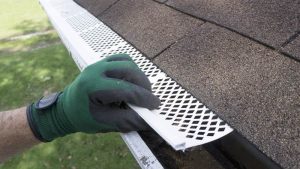
It's genuinely important for homeowners to clean their gutters at least twice a year. That said, cleaning gutters properly can be a bit technical and time-consuming, which is exactly why gutter guards can seem like an appealing quick fix.
But would you still need to clean your gutters even with gutter guards installed? And if so, what's the right way to clean them? This beginner's guide to cleaning gutters properly answers both of those questions, and more.
In this guide
Do You Have To Clean Gutter Guards?
Yes — gutter guards need cleaning too, just like the gutters underneath them. Even though gutter guards are marketed as low-maintenance systems, they can't fully block every bit of debris and dirt from working its way into the gutter.
Cleaning your gutter guards twice a year is a solid target — once in spring, and again in fall.
That said, gutter guards come in several different types, and depending on which one you have installed, you may need more or less frequent cleaning. Every gutter guard system also comes with its own specific maintenance recommendations worth following. Staying on top of gutter guard cleaning generally saves you from a much bigger, more involved maintenance job after major storms or a heavy leaf-fall season.
Why Is Gutter Cleaning Important?
Most homeowners pay less attention to their gutters than they probably should. But even small specks of dirt and debris can easily clog a gutter, causing rainwater to overflow and damage both the exterior and interior of your property over time.
Clogged gutters also make an unfortunately good home for problem pests like insects, birds, and rodents, and certain infestations can turn into a genuine health hazard for your household. Regular gutter cleaning helps clear these pests out and meaningfully lowers the odds of an infestation taking hold in the first place.
Left unaddressed, clogged gutters can eventually damage your roof, leading to costly repairs or, in the worst cases, a full roof replacement. Overflow from clogged gutters can also damage your foundation, since water pools right around it instead of draining away — on top of dragging down your property's overall curb appeal. This is exactly why keeping your gutters properly cleaned matters as much as it does.
In short, regularly cleaning your gutters helps to:
- Prevent water damage
- Preserve the condition of your roofing
- Keep problem pests away
- Protect your foundation from damage
- Save you money on future maintenance and replacement costs
As the saying goes, a stitch in time saves nine — so it's worth acting on this sooner rather than later.
Can You Use Bleach On Gutters?
Yes, bleach can be used to clean gutters effectively — just avoid applying it completely undiluted directly onto the surface. A 50/50 mixture of water and bleach is a better choice, strong enough to do the job without being unnecessarily harsh on the gutter material itself.
Bleach is genuinely effective against mildew, and adding a plain, ammonia-free dish detergent to the mixture can boost its cleaning power further for tougher grime. One important safety note: never combine bleach with a detergent, glass cleaner, or any other product containing ammonia — that combination produces toxic chloramine gas. Always check a product's label first, and stick to a simple, ammonia-free dish soap if you're adding detergent to the mix.
A simple mixture of water, diluted bleach, and ammonia-free dish soap is genuinely effective at lifting tough stains from gutters, and it's a commonly preferred approach for most gutter materials, vinyl gutters included.
Can You Use a Leaf Blower To Clean Gutters?
Absolutely — a leaf blower is a genuinely faster, safer, and more efficient way to clear out gutters compared to doing it entirely by hand. Leaves are essentially unavoidable in gutters during certain seasons, and a leaf blower cuts down significantly on the hassle of clearing them.
That said, be genuinely careful if you're climbing a ladder to reach your gutters with the blower. As an alternative, a specialized curved extension kit can extend a leaf blower's reach enough to clean gutters directly from the ground, without needing a ladder at all.
This method can get genuinely messy, with dirt and debris blowing back toward you, so it's worth wearing eye protection and expecting you might need a change of clothes afterward. Whichever way you do it, be careful not to blow leaves and debris directly into the downspout, since that just relocates the clog rather than clearing it.
Do Gutter Covers Work?
Yes, gutter covers genuinely help reduce clogging, and they cut down meaningfully on how often you'll need to clean your gutters overall. Twigs, dirt, and leaves tend to pile up in gutters, especially during fall, and left unchecked, that buildup blocks proper drainage and stops the gutter from doing its job.
Properly installed and well-maintained gutter covers are genuinely useful for keeping debris out. That said, it's worth keeping in mind that no cover offers complete protection against clogging, and none of them make a gutter fully immune to dirt buildup. You'll still need to clean your gutters periodically to keep them working properly and get the longest life out of them.
Do Gutter Guards Keep Out Pine Needles?
To a meaningful degree, yes — certain types of gutter guards do a noticeably better job than others at keeping pine needles out, though no gutter guard fully blocks them 100% of the time. Most standard gutter guard designs actually aren't very effective against pine needles specifically, since needles are long but genuinely thin, which lets them slip through the openings that would otherwise stop broader leaves and debris.
Which Gutter Guards Are Best For Pine Needles?
Although no gutter guard design keeps every single pine needle out, some types meaningfully limit how many actually make it into the gutter. If pine needles are the main type of debris you deal with, micro-mesh gutter guards are genuinely worth considering — they're one of the better options specifically for this problem, since water drains through the fine mesh easily while solid debris like pine needles mostly sits on top until it eventually washes off in the rain.
Other options, like broad-spread steel gutter guards or open-mesh guards, exist too, but they don't block pine needles nearly as effectively as a micro-mesh design does. It's also worth keeping in mind that even successful micro-mesh guards still need periodic cleaning, since these fine screens can accumulate mildew and dust buildup on their surface over time regardless of how well they handle needles specifically.
How Are Gutters Cleaned?
Gutter cleaning is a task most homeowners genuinely dread, so it's completely normal to want to put it off or avoid it entirely. If you'd rather not deal with it yourself, hiring a professional to handle it is a perfectly reasonable choice.
If you're up for tackling it yourself, though, there are several effective approaches. You can use a leaf blower, a wet/dry vacuum, or simply a power washer paired with a garden hose.
If you don't own any of that equipment, you can still get the job done with a ladder, sturdy work gloves, and either a dedicated gutter scoop or a basic hand trowel. This manual approach takes real time, since you'll be pulling out twigs and dirt by hand and collecting them in a bucket as you go — finish by flushing the downspout with a garden hose to confirm it's fully clear.
If it's been a genuinely long time since your gutters were last cleaned, a more thorough cleaning is worth the extra effort. These steps work especially well if you have the right equipment on hand:
- Clear out twigs, dirt, and other debris using an air blower as described above, or collect it by hand into a bucket.
- Flush the gutter thoroughly with a garden hose.
- Confirm the downspout isn't clogged — if it is, clear it using a garden hose or power washer.
Be genuinely careful any time you're working from a ladder — have someone else nearby to help stabilize it so you're not at risk of a fall.
That said, it's entirely possible to clean your gutters without ever using a ladder, as long as you have the right power tools and attachments. A few worth considering:
- Leaf blowers with specialized gutter-cleaning attachments
- Wet/dry vacuums with curved extension attachments
- Gutter cleaning tongs
- Gutter flushing wands
- Rotary gutter cleaning brushes
Gutter Related Posts
- How Long Can a House Go Without Gutters?
- How to Cut Aluminum Gutters?
- Gutter Installation Mistakes to Avoid
- How Do Gutter And Downspouts Work? (Explained for Beginners)
- How To Maintain Your Gutter And Downspout During The Winter: (Important Facts)
- Gutter Installation Tips For Your Home: Important Answers for Beginners!
- Do You Need Gutter Guards For Your Roof? (Read This First!)
- Dealing With Clogged Gutters? Here's everything you need to know