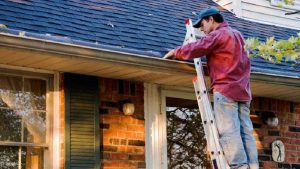
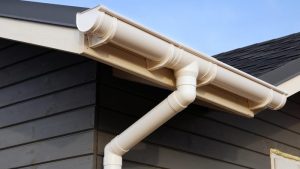
Gutters are natural traps for fallen leaves, tree branches, roof grit, and all kinds of other outdoor debris. Without regular cleaning or some form of protection, a gutter gradually fills with heavy, waterlogged debris that can cause real damage if left unaddressed.
A gutter system is an investment meant to protect your home by directing rainwater safely away from it. But once it clogs, the gutter can't do that job properly anymore, and if the clog gets bad enough, the added weight can cause the gutter to bend or, in the worst case, pull away from the roof entirely.
A gutter guard can help protect your home from exactly this kind of damage — but do they actually work? Let's look at how they function and whether they're the right fit for your home.
In this guide
Do Gutter Guards Work In Heavy Rain?
Gutter guards are designed to keep debris from entering and building up inside your gutters. That said, gutter guard styles vary quite a bit, and each comes with its own tradeoffs worth understanding before deciding which one suits your home.
Some gutter guards use larger openings that let bigger debris, like small branches and acorns, pass straight through along with the water. Others use a much finer mesh that only lets tiny particles, like sand or grit, through at all. With so many different gutter cover styles on the market, choosing the right one can feel genuinely overwhelming — here's an overview of the main types to help you decide.
The most common gutter guard designs include micro-mesh screens (fine metal mesh that blocks even small debris while still letting water through), reverse-curve or "surface tension" guards (a solid, curved cover that uses water's natural adhesion to pull it down into the gutter while debris slides off the front edge), perforated aluminum or vinyl guards with punched holes sized to block leaves and larger debris, foam inserts that sit directly inside the gutter channel, and brush-style guards made from stiff bristles that physically block debris while letting water pass between them.
Solid reverse-curve guards tend to be the easiest to inspect for damage from the ground and are relatively resistant to casual tampering, since removing them without damaging the underlying gutter takes real effort. When you're shopping for a gutter guard or protection system, it's worth having enough solid information to make the right call for your home and budget — that's exactly what the rest of this guide is here to help with.
Installing a gutter guard over your existing gutter system keeps most debris out while still letting water enter, pass through, and drain away from your home as intended. Water flows through the guard while larger debris is kept out — but it's worth knowing that most guards genuinely struggle to keep up during truly heavy rain. They generally aren't designed to handle the sheer volume of water a serious downpour can produce, and water can end up flowing through the guard fast enough that some of it overshoots the gutter channel entirely rather than draining through it, similar to how water spills over the lip of an overflowing sink.
In a genuine worst-case scenario, that overflow can pool around your home's foundation, creating a real risk to your home's structure over time. Because these guards can shed water faster than a standard shingle roof sheds it into the gutter, they also tend to perform less well when paired with metal or slate roofing, or with a particularly steep shingle roof, both of which can send water into the gutter at a higher volume or velocity than the guard is designed to handle gracefully.
A well-designed gutter guard installation should also include splash guards or another form of water diversion at the corners underneath roof valleys, specifically to prevent this kind of splashing and overflow. Some homeowners find these small splash guards visually distracting or feel they detract from the gutter system's overall appearance, since they're sometimes visible from ground level. Bottom line: while a gutter guard can genuinely keep coarse debris out of your gutters, it introduces its own tradeoffs that are worth watching for to avoid costly water damage down the line.
Does A Gutter Guard Work?
Yes, gutters themselves play a genuinely important role in protecting your home. When they're missing or blocked, water can eventually damage fascia boards and even work its way back up under the roof's shingles. Beyond the roofline, properly draining rainwater away from the home is essential to protecting the rest of the structure too.
To cut down on how often they need to clean their gutters, plenty of homeowners choose to install gutter guards or covers. That said, it's worth knowing upfront that most guards don't eliminate the need for gutter cleaning entirely, and in some cases they can even make the occasional cleaning that's still required more complicated.
Even guards designed to stop leaves from forming a solid cover over the gutter can introduce their own issues — small twigs and other fine debris can still gather on the guard's surface or overhang, creating small pools of standing water. And even when a gutter guard is working exactly as designed, moss and algae growth can still become a real problem, since it only takes a small amount of leaf litter or organic debris settling on the guard to create a hospitable environment for both to take hold. Left unchecked, that growth keeps spreading, and it can eventually break apart and wash into the downspout, clogging it from the inside.
Overall, a gutter guard isn't quite the maintenance-free solution it's sometimes marketed as. Even the best brands will still eventually let some debris and organic buildup accumulate. A gutter guard reduces how much debris gets in and how often you need to clean, but it doesn't rule out the need for occasional cleaning altogether — and in some cases, it can make that cleaning more involved and more expensive when it is needed.
While a good guard does keep out most leaves and larger debris, some guard designs can't be easily removed for cleaning at all. In that situation, your main options are hiring a professional to rinse the system under pressure and clear what they can, or replacing the guard outright. If you choose a guard design that can be at least partially removed, cleaning becomes considerably more manageable, even if it still takes real time and effort — you'll likely need to clean less often overall, but the guard itself will typically cost more upfront.
If you do decide to use a gutter guard, a hinged style is generally considered one of the better options on the market, since it can be lifted open for cleaning at no extra cost or effort beyond the hinge itself. That said, it's still not a perfect solution — hinged guards typically swing open away from the roofline, which can make cleaning from a ladder somewhat more awkward than it would be with an unobstructed gutter.
Do Foam Gutter Guards Work?
Cleaning gutters is a genuinely demanding, sometimes risky task — climbing up to clear a blocked gutter puts you at real risk of a fall or injury every time you do it. Foam gutter guards can help by reducing how often the gutter clogs, discouraging pests from nesting inside the gutter channel, and cutting down meaningfully on time spent up a ladder.
Most foam gutter inserts are made from polyurethane or a similar open-cell foam. The foam acts as a physical filter, blocking larger debris from the water flowing beneath and through it. That said, these foam inserts typically only last a year or two before needing replacement, which makes them a comparatively costly long-term option once you factor in repeated replacement costs.
Foam also tends to absorb and retain oils and tar washed off asphalt shingle roofs. Over time, that buildup accumulates inside the foam's cell structure and can eventually harden the foam into a solid, water-resistant mass. At that point, the very system meant to keep water flowing freely through the gutter ends up blocking it instead — directly undermining the whole point of installing a gutter guard in the first place, which is keeping the drainage system clear and free-flowing.
Where Can I Buy LeafFilter Gutter Guards?
The cost of LeafFilter installation depends on your home's size and whether your existing gutters need replacing as part of the job. As a rough guide, LeafFilter gutter guards run somewhere around $17 to $43 per linear foot, materials and installation included.
For a home with roughly 150 to 200 linear feet of gutter, that generally works out to somewhere between about $2,650 and $6,300 for a full professional installation. LeafFilter gutter guards are sold exclusively through LeafFilter directly (LeafFilter.com) — the company will typically arrange an on-site assessment and consultation before you commit to purchasing a system.
Do Gutter Leaf Guards Really Work?
Gutter covers genuinely do make gutters easier to maintain overall. Their main real benefit is reducing how often you actually need to clean your gutters — with a good system in place, you may not need to clean them again for years at a time.
There is a real downside worth knowing about, though: some gutter guard designs can cause water to shed off the roof edge and around the gutter entirely rather than draining into it as intended. If that happens regularly, you're effectively paying for a gutter guard system that isn't actually capturing the water it's meant to direct — undermining the very purpose of having gutters in the first place. It's worth confirming with an installer that whichever system you choose is properly sized and pitched for your specific roof to avoid this outcome.
Can You Put Gutter Guards Under Shingles?
If someone told you that installing a gutter guard automatically voids your roof shingle warranty, that's not quite accurate — it really depends on how the specific guard is installed. Many gutter guards attach entirely to the gutter or fascia and never touch the shingles at all, and installations like that generally have no bearing on your shingle warranty whatsoever.
The real risk comes from gutter guard systems that require sliding fasteners or screws underneath the first row of shingles to secure the guard in place. That kind of installation can break the roof's water barrier at the edge, which genuinely can lead to costly water damage down the road — and shingle manufacturers commonly consider that kind of penetration or disturbance grounds to void the roofing warranty, since it involves physically altering how the shingles were originally installed.
Ironically, this means a roofer who installs this style of gutter guard on a customer's home can end up inadvertently voiding the very shingle warranty they were originally responsible for protecting. If a gutter guard installation genuinely requires lifting or sliding under your roof shingles, you're generally better off choosing a different system that doesn't touch the shingles at all.
Gutter Related Posts
- How Long Can a House Go Without Gutters?
- How to Cut Aluminum Gutters?
- Gutter Installation Mistakes to Avoid
- How Do Gutter And Downspouts Work? (Explained for Beginners)
- How To Maintain Your Gutter And Downspout During The Winter: (Important Facts)
- Gutter Installation Tips For Your Home: Important Answers for Beginners!
- Dealing With Clogged Gutters? Here's everything you need to know
- How To Keep Your Gutters Clean (8 Answers You Should Know)