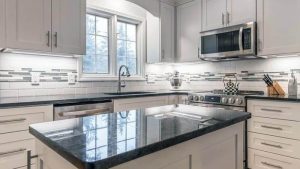
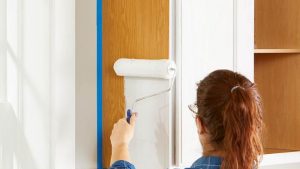
If you don't want your kitchen looking a bit too disorganized, kitchen cabinets are one component that shouldn't be an afterthought. The quality of life a family experiences at home isn't only reflected in the living room or bedroom — the quality of the kitchen environment shapes the feel of the entire house.
From storing utensils to providing an aesthetic face-lift to making a room feel larger than it is, kitchen cabinets are a vital part of any kitchen and deserve careful consideration. You don't want just a beautiful cabinet — you want one that'll stand the test of time and suit your kitchen's overall decor. To make that decision easier, here's a comprehensive guide to help you select the kitchen cabinets that'll actually meet your needs.
In this guide
What Can You Suggest For a Kitchen Cabinet?
Cabinets take up a lot of visual and physical space in a kitchen. Since they set the tone the moment you walk in, it's worth paying real attention to their appearance and how they'll shape the room's overall atmosphere.
Cabinets are often the true focal point of a kitchen, so beyond material choice and cost, the style of cabinet you pick matters just as much. Shaker cabinets, flat-panel cabinets, cabinets with glass doors — the possibilities are nearly endless. Here are our top suggestions for narrowing that down.
Choose a style that matches your home
Is your home more classic, with plenty of moldings and cornices? Or is it a heritage-style home with exposed wood beams and paneling? Choosing a cabinet style that matches the rest of your home is essential for a coherent overall look — it's worth taking a moment to identify your home's broader interior design style before picking cabinets that clash with it.
Choose cabinets that are resistant, versatile, and warm
Like it or not, the majority of your kitchen's daily wear and tear ends up directed at these pieces. You don't want cabinets that flinch at the slightest touch — durability matters here just as much as looks.
Choose materials that can withstand humidity
As you'll quickly discover, water is the worst enemy of a wooden cabinet — unless you plate it in gold, which, admittedly, isn't a realistic option for most kitchens.
If these general suggestions haven't fully settled your decision yet, don't worry — we've narrowed things down to the four best materials to look out for when selecting your kitchen cabinets.
4 Best Materials For Kitchen Cabinets
1. Melamine
Pros
- Wide range of colors and finishes available
- Keeps up well with current design trends
- Fairly good scratch resistance, except in glossy finishes
- Easy to maintain day to day
- Affordable relative to most alternatives
Cons
- Often perceived as a lower-end material
- Fragile against bumps and scratches
- Sensitive to heat and humidity over time
- Fingerprints show up more noticeably on matte and dark finishes
- Difficult to repair once damaged
2. Thermoplastic
Pros
- Large selection of styles, doors, finishes, and colors
- Fairly resistant to impact and scratches
- Uniform color that holds up well and doesn't fade over time
- Generally stronger than most melamine and laminate options
- Good value for the price
- Easy to maintain
Cons
- Low heat resistance — keep it away from a self-cleaning oven cycle, toaster, or kettle
- Difficult to repair
- Has a noticeably plastic finish
3. Polyester
Pros
- Many color and finish choices
- Excellent price-to-performance ratio
- Strong resistance to heat, humidity, fading, impact, and scratches
- Convincing imitation of various wood species
- Easy to maintain
Cons
- Difficult to repair once damaged
4. Wood
Pros
- Timeless look
- Genuinely durable
- Refined and elegant
- Resistant to impact, depending on the wood species and quality
- Can actually be repaired rather than replaced
- Many choices of species, styles, colors, and finishes — glossy, semi-gloss, oiled, or matte
- Minimal ongoing maintenance
Cons
- Higher upfront cost than most alternatives
Why Should One Choose Custom Kitchen Cabinets?
Kitchen cabinets generally come in three variants: stock, semi-custom, and fully custom. The custom option has become considerably more popular in recent years, for some genuinely good reasons.
Custom kitchen cabinets can also boost your home's resale value, and here are five specific reasons to consider going custom:
- Tailored to your taste. Custom designs can be planned before the kitchen floor itself is even finished, with plumbing, wiring, and outlets positioned exactly where they're most convenient for you, and the overall layout designed around how you actually use the space rather than a generic template.
- Fills the space precisely. Stock cabinets are built to standard sizes, which usually means filler panels and awkward gaps wherever your kitchen's dimensions don't match those standard measurements exactly. Custom cabinets are built to your actual wall and corner dimensions, so you get to use every inch of available space.
- Saves space through smarter design. Ordinary stock cabinets generally offer only basic storage with little thought given to how the space is actually organized internally. Custom cabinets from an experienced manufacturer are designed functionally from the start, giving you meaningfully more usable storage and easier access to everyday kitchen items.
- Longer service life. A set of well-made custom cabinets tends to last considerably longer, and can be reconfigured, adjusted, or rearranged over time as your needs change. Mass-produced stock cabinets often prioritize outward appearance over build quality, which is why hinges and doors can start creaking and sagging after a surprisingly short time. Custom cabinet designers, by contrast, tend to think through the ergonomics and hardware selection more carefully, which shows up as a sturdier, longer-lasting result.
- More affordable than most people expect. Counterintuitively, ordering custom cabinets directly from a large manufacturer with an efficient assembly-line process is often cheaper overall than buying raw materials and hardware separately to build comparable cabinets yourself, or hiring an independent carpenter to build them entirely from scratch — since large manufacturers buy materials in bulk and spread costs across batch production runs instead of charging single-project markups.
What Is The Major Problem With Kitchen Cabinets?
The single biggest enemy of any kitchen cabinet is simply time. With extensive daily use, doors and drawers gradually start to malfunction — the ordinary symptoms of wear and tear. It shouldn't come as a surprise when doors start refusing to close properly or sagging out of alignment.
It's also fairly common for fiberboard countertops and cabinet edges to begin deteriorating over time, especially in the areas right around the sink and faucet where moisture exposure is highest — this is exactly why the humidity-resistance point covered earlier in this guide matters so much when you're first choosing a material. And if you've turned your under-sink cabinet into extra storage space, keep an eye out for hidden leaks and base damage that can go unnoticed for a long time behind stored items, since a slow drip under a stack of cleaning supplies can quietly rot a cabinet base for months before it's ever noticed.
What Is The Best Time Of Year to Buy Kitchen Cabinets?
Late November and December tend to be the most favorable months of the year to buy kitchen cabinets, largely for financial reasons rather than selection.
Spring is the most popular season for cabinet purchases, which puts you in direct competition with a huge number of other homeowners nationwide for contractor time and material availability. That's exactly the crunch worth avoiding, since demand and pricing tend to move together. Buying at the end of the year instead means contractor demand is comparatively low, while contractors themselves are often more motivated to close out sales before year-end — a combination that tends to work in your favor at the negotiating table. That matters more than it might seem, since labor typically accounts for more than half the total cost of installing kitchen cabinets, so getting a better rate on labor specifically has an outsized effect on your final bill.
Do Kitchen Cabinets Go On Sale?
Absolutely, yes. Kitchen cabinets go on sale regularly through manufacturers, home improvement retailers, and secondhand marketplaces alike — used cabinets in decent condition are also easy to find for resale on sites like eBay and local marketplace listings. As long as your old cabinets haven't been badly damaged, with intact doors and hardware, there's usually a ready market of buyers looking for exactly that kind of secondhand deal.
Are Costco Kitchen Cabinets a Good Deal?
To figure out whether Costco's cabinet offerings are right for you, it helps to understand both what to look out for and what genuine advantages the retailer brings to the table.
Headquartered in Issaquah, Washington, and employing roughly 340,000 people worldwide, Costco is not your average retailer — it currently ranks as the world's fifth-largest retailer by revenue, a scale that comes with real purchasing power and supply-chain advantages most independent cabinet makers simply can't match.
Here are the top reasons worth considering Costco kitchen cabinets for your next purchase:
- Wide range of options with a strong online presence. This is the first thing you'll notice browsing Costco's website — an extensive range of cabinet styles and configurations to choose from. Since Costco doesn't stock cabinets in physical warehouses, ordering online gets you direct home delivery, with shipping and handling costs folded into the upfront price rather than added as a surprise later.
- Solid build quality. In keeping with its reputation, Costco sources a meaningful share of its cabinet lineup built from ¾-inch plywood panels rather than the thinner, more common ½-inch plywood used by many budget cabinet lines, with cabinet faces finished in either real hardwood veneer or high-quality laminate — details worth confirming with the specific product listing, since construction can vary between individual cabinet lines Costco carries.
- Genuinely competitive pricing. Despite the name, Costco's cabinet pricing tends to land on the affordable side once you weigh it against the build quality on offer — the sturdier construction you're getting generally justifies the price rather than exceeding it.
- Available across all three cabinet categories — stock, semi-custom, and fully custom — giving you real flexibility depending on your budget and timeline, rather than forcing you into a single tier.
- Membership return policy as a safety net. As with most Costco purchases, cabinet orders are typically backed by the company's broader satisfaction guarantee, which gives you more room to address defects or dissatisfaction after installation than you'd usually get from a small independent cabinet shop.
Whichever route you take — a big-box retailer like Costco, a dedicated custom cabinet maker, or a stock option from a home improvement store — the same fundamentals from earlier in this guide still apply: match the material to how hard your kitchen actually gets used, prioritize hardware and construction quality over surface appearance alone, and time your purchase around late fall or early winter if price is a bigger factor for you than getting the cabinets installed immediately.