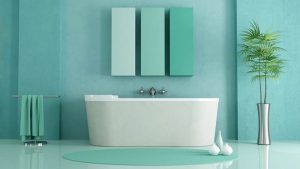
A bathroom vanity is genuinely the most customizable fixture in the whole room. Why? A toilet or bathtub is fairly basic — the size might change, but the overall style stays pretty consistent from one to the next.
Bathroom vanities are a different story entirely. They come in a genuinely wide range of colors, shapes, and designs, giving you real room to bring your own taste into the space and match it to your bathroom's overall theme.
If you're not entirely sure what a vanity actually is or what your options look like, the next section breaks it all down.
Bathroom Vanities
A bathroom vanity is generally defined as a bathroom fixture combining a mirror, sink, countertop, and either cabinets or open shelving underneath.
The lower section typically conceals the sink's plumbing, while the upper section — drawers, shelves, or both — holds everyday bathroom essentials.
A bit of background:
The earliest ancestor of today's vanity dates back to the 18th century, when it typically consisted of little more than a basin and, in some cases, a small counter surface. As furniture design progressed, vanities began appearing in a much wider range of designs and sizes.
These early pieces were originally known as "dressing tables" or "toilet tables" rather than vanities, and they looked quite different from what we'd recognize as a bathroom vanity today — it took decades for the style to gradually evolve into its modern form.
Modern vanities now commonly include built-in lighting, decorative detailing, and a mix of shelving and cabinets to meet homeowners' actual storage needs. There's really no hard restriction on size or color these days — you can go with pretty much anything, as long as it doesn't clash too dramatically with the rest of the room.
You can pick up a ready-made bathroom vanity from any home improvement store, or work with a carpenter to have one custom-built to your exact specifications.
Let's walk through the different types of bathroom vanities available for your space.
Types of Bathroom Vanities
Vanities are a genuinely important bathroom fixture. You've probably seen the classic vanity-with-sink combo before, but there's a lot more variety worth knowing about. Let's dive in.
Free-Standing Vanity
Let's start with one of the oldest styles in this category — a design lineage that traces back to at least 1762, when English furniture designer Thomas Chippendale published a well-documented dressing table design that's considered one of the earliest ancestors of the modern vanity.
A free-standing vanity includes a sink and cabinet but isn't fixed to any particular spot in the room — you can place it in the bathroom or even the bedroom, entirely up to you.
These vanities tend to carry a genuinely vintage look, and if you already have one, painting it is an easy way to lean further into a retro theme.
Pedestal Vanity
Pedestal vanities are genuinely minimalist — just a sink mounted on a slim pedestal base, with no cabinet space at all. Unlike a free-standing vanity, the plumbing here typically isn't hidden inside a cabinet, and the fixture itself is generally fixed in place rather than movable.
It's a genuinely solid choice if you're working with a minimalist aesthetic or limited space, since it adds visual style without making the room feel any more cramped.
Vessel Vanity
Vessel vanities work differently from the two styles above. With a vessel vanity, the sink basin sits entirely on top of the vanity's countertop rather than being recessed into it or fixed flush with the surface.
Semi-vessel vanities also exist, where roughly half the basin sits recessed into the countertop and the other half rises above it.
Vessel vanities work well across a genuinely wide range of bathroom styles and sizes, whether modern or traditional, compact or spacious. They're generally straightforward to install and add a real design statement to the room.
Some vessel vanities can run fairly expensive depending on the size and material you choose, but in exchange, you get considerably more room to customize the final look.
Wall-Mounted Vanities
Wall-mounted vanities bring a genuinely stylish, modern look. They're mounted directly to the wall, floating above the floor rather than resting on it, and tend to run shallower than standard floor-standing vanities specifically to preserve that clean, minimal look.
These "floating" vanities also tend to offer less storage space overall, since the plumbing usually runs concealed within the wall itself rather than a cabinet below. Despite their contemporary look, there's no hard rule limiting where you can use them — they work equally well in a bathroom or even a bedroom setting.
Narrow Vanities
As the name suggests, narrow vanities are built specifically for tighter spaces. If you're remodeling a bathroom with limited square footage, a shallow-depth cabinet or narrow vanity unit is a genuinely effective way to add storage without making the room feel more congested.
Pedestal vanities can work well in a similarly tight space too, but if you still want a bit of extra storage for everyday items like shampoo and scrubs, a shallow-depth vanity strikes a genuinely useful middle ground between the two.
Narrow vanities also leave you with a genuinely comfortable amount of walking space while still offering a functional fixture. They can work just as well in a bedroom or a lounge area if you need the extra storage there too.
Conclusion
When you're planning a bathroom renovation, get clear on what you actually need in terms of design and available space first. Measure both your bathroom and the specific wall where you plan to install the vanity before you buy anything.
Those measurements matter a lot if you're ordering a vanity online — if you're working with a carpenter or interior designer instead, they'll typically handle that sizing for you directly. Either way, there's no shortage of service providers and brands out there to help you find the right fit.
With all these options on the table, it's worth taking a moment to think through which vanity style would genuinely work best for your specific bathroom.