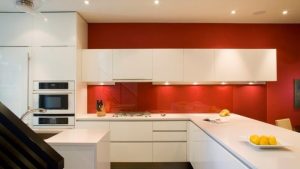
A white marble countertop with a rounded edge is a classic look that works beautifully for conventional kitchen counters.
Stainless steel countertops or marble worktops with a marine edge take that a step further: they have a raised outer lip that sits noticeably higher than the rest of the surface.
In this guide
Multiple Types of Countertop Edges
The overwhelming majority of people don't think about what kind of edge profile they want until their countertop fabricator asks them.
That's completely normal, since it's a subtle detail that mostly only fabricators tend to notice.
Even so, it's worth talking with your countertop fabricator to figure out which edge profile completes the look you're going for and best suits your kitchen's design.
To help with that conversation, here are a few key facts about several common edge types, along with their more familiar names:
1. The Straight Edge
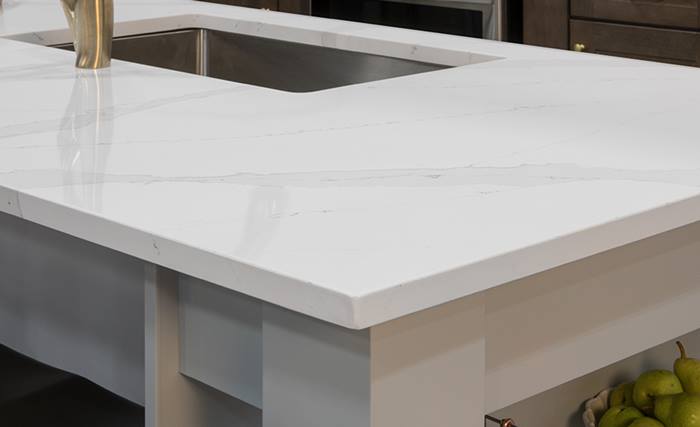
In practice, you'll rarely see a truly sharp 90-degree edge on a finished countertop; it's almost always given a slight ease.
That slight easing is done for two main reasons: safety (to reduce the risk of injury from a sharp corner) and comfort while leaning against the counter.
This edge style gives kitchens a clean, modern look with a smooth overall appearance.
2. Top Edge Rounded
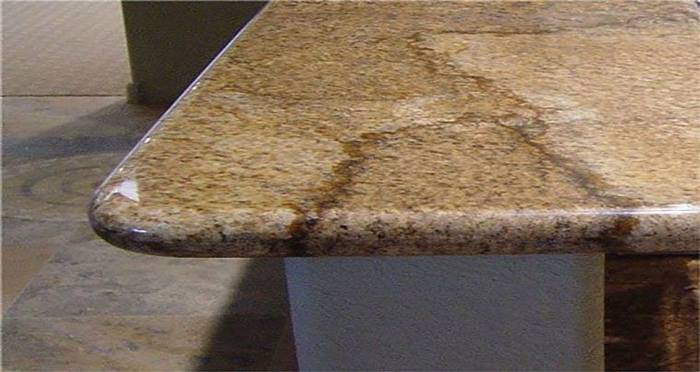
A slightly rounded top edge makes the counter more comfortable to lean against while keeping the clean, contemporary look of a square edge.
It's a small touch that noticeably improves the overall feel of a kitchen.
3. A Slightly Slanted Edge
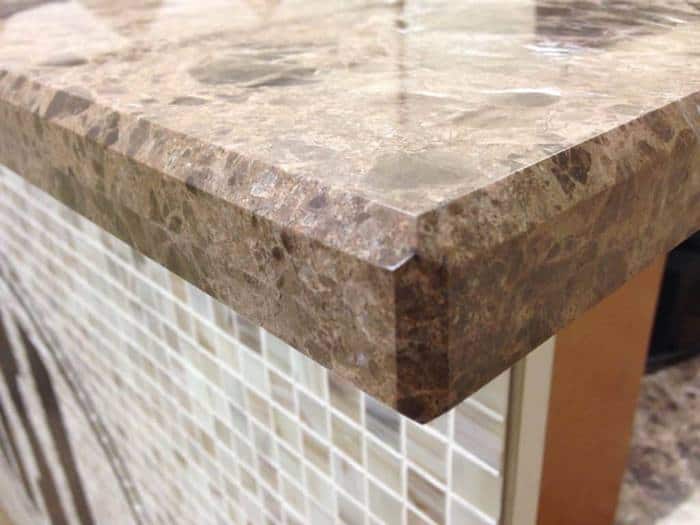
This is another variation on the square edge, where the top edge is cut at roughly a 45-degree angle so it slants downward.
It's a simple way to draw the eye to the edge of the counter, since light catches the angled surface differently than it does the flat work surface, giving natural stone countertops a subtle, almost pearl-like shimmer along the edge.
This slanted, waterfall-style edge, with its clean corners, works especially well in modern kitchen designs.
4. Semi-Circular Edges
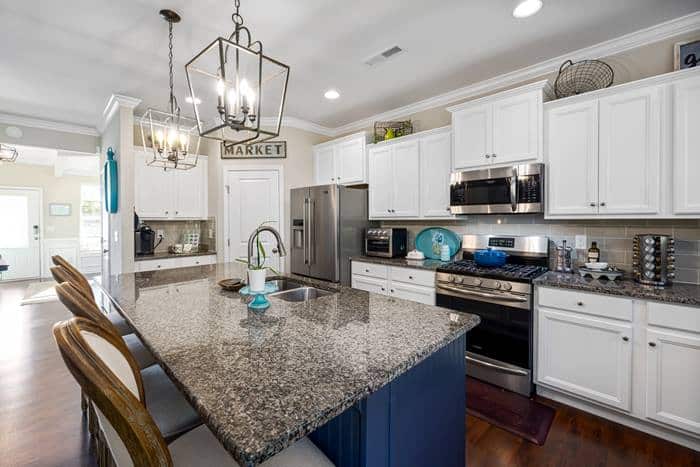
Known as a bullnose, this profile smooths the top and bottom corners of the edge into a gentle, fully rounded curve. It works well in almost any style of kitchen.
One downside of this edge is that spills on the counter can run down the rounded edge and drip into the cabinetry below.
It's worth wiping up spills promptly for this reason, before they have a chance to run down the edge.
5. Beveled Edge
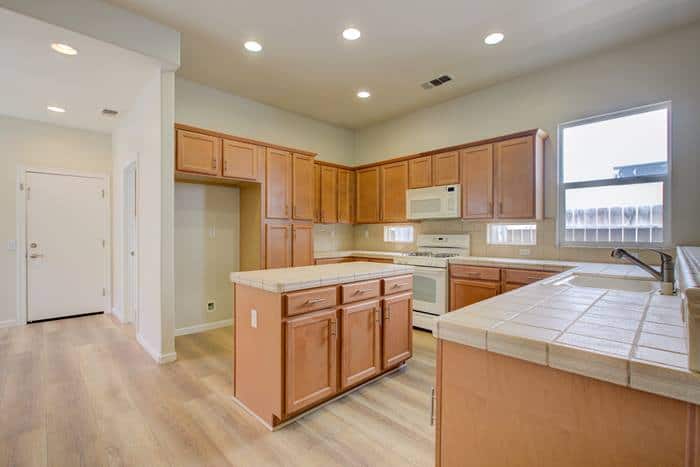
This edge is essentially a direct answer to the drip problem of a full bullnose.
It's rounded in a similar way on top, but it keeps a defined point along the bottom edge, so any drips are directed off that point rather than running all the way down to the cabinet below.
6. Mitered (Sharp Corner) Edge
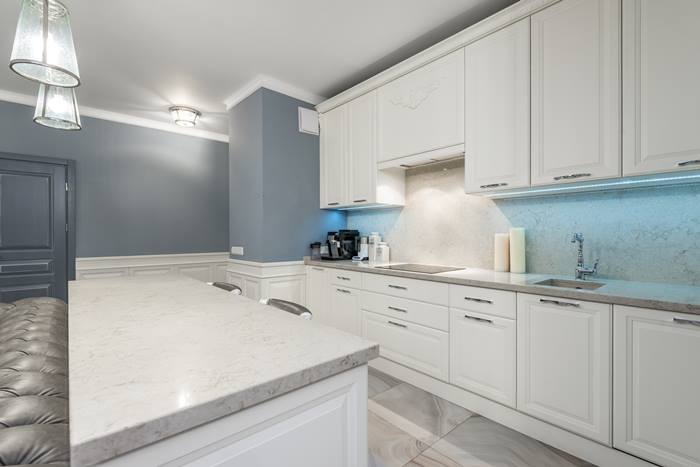
The appeal of this edge is that it creates the illusion of a thicker slab of stone than what's actually there.
While this detail can make the counter a real focal point of the kitchen, the clean lines of a mitered edge mean it still fits comfortably into a modern design.
7. Classic Edges
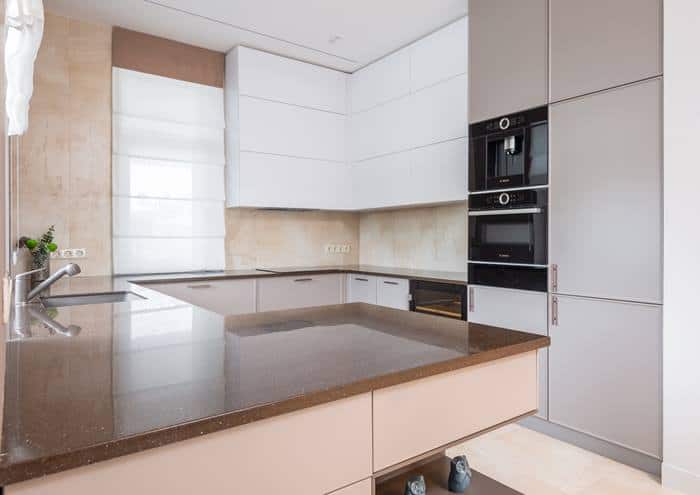
The Dupont, French cove, and Ogee edges are classic profiles with dramatic, curving flourishes that draw the eye straight to the countertop.
Reach for one of these if you want your countertop to be the true focal point of the kitchen.
All three of these edges add a sense of elegance and luxury to a kitchen. Realistically, the range of edge profiles available to finish a countertop is almost endless.
That's before you even factor in laminated edges, which are essentially separate edge pieces bonded onto the front of the countertop.
Some manufacturers also offer distinctive, custom edge designs of their own.
So rather than being caught off guard when someone asks what edge profile you want, reach out to your local countertop fabricator early in the design process to see what options they offer.
That way, you'll have a complete picture of what's possible before you commit to a countertop material.
Stainless Steel Marine Countertops
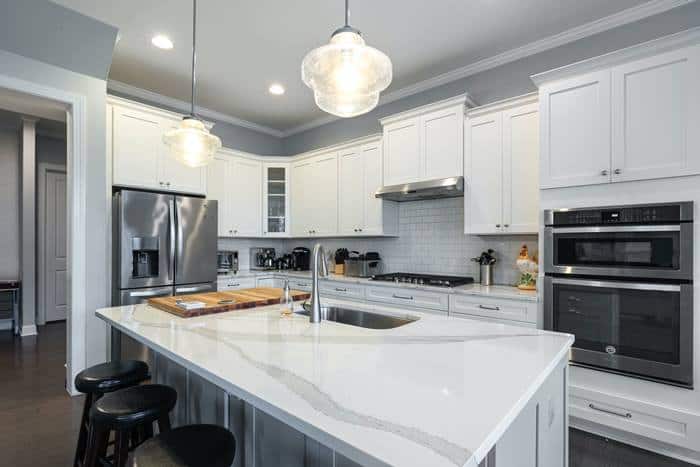
Stainless steel, widely considered one of the most hygienic countertop surfaces available, also brings a level of class and strength that few other materials can match.
Working with a stainless steel countertop makes it possible to integrate sinks directly into the surface. Fabricators can also build in drainboards, backsplashes, compost bins, and drip-free marine edges as part of the same piece.
A striking stainless steel "U-shaped" countertop is a good example of just how many of these options can come together in one piece.
A countertop like this is typically welded together from separate sections, then ground smooth and installed as a single, seamless piece, exactly the kind of setup that any serious home cook or professional chef would appreciate.
Advantages of a Marine Edge Countertop
- Marine edge countertops keep spilled drinks and liquids from running over the edge of the counter, which is exactly why these edges show up so often in commercial settings like fast food restaurants.
- Many people (cooks, kids, servers) move quickly back and forth in a busy restaurant or commercial kitchen. When liquids splash onto a standard countertop, they can drip straight off the edge and onto the floor, creating a slip-and-fall hazard for anyone walking through the area, on top of the mess itself.
- A marine edge contains those liquids on the countertop instead, where they can be wiped away safely, keeping the kitchen both clean and safer to walk through.
Disadvantages of a Marine Edge Countertop
- The main downside of adding a marine edge to your countertop is the added cost and lead time.
- Most countertop edges are level with the rest of the surface, so the edge profile only needs to be sanded or shaped from the existing slab. A marine edge, by contrast, has to be built up separately, since it involves layering additional material to form the raised lip around the border.
- As a result, a marine edge may not be the best fit if you're trying to keep countertop costs down or need a countertop finished quickly.
Conclusion
To wrap it all up, a marine edge, sometimes also called a no-drip edge, is one of the most distinctive countertop edges available.
A marine edge countertop is defined by a raised ridge that runs around the perimeter of the surface.
Whichever edge you choose, it plays a real role in how the countertop reads within the wider kitchen space.
So whether you're a designer, a builder, a homeowner, or just decorating, it's worth understanding the major countertop edge styles so you can get the best possible result for your space.