Do you have cockroaches in your home? It's a genuinely unpleasant situation to deal with. A cockroach infestation isn't just gross — it can also be a real health concern, since cockroaches are known to exacerbate respiratory conditions. If you or someone you live with has asthma, that makes it even more important to act quickly.
If this is the first cockroach infestation you've dealt with, you're probably somewhere between panicked and overwhelmed. Where do you even start? The internet is full of contradictory advice on this particularly resilient pest, so here you'll find clear answers to the most frequently asked questions. Read on, and you'll be well on your way to getting rid of these unwanted house guests.
In this guide
- How Do You Know You Have Cockroaches?
- How Do You Get Rid of a Heavy Cockroach Infestation?
- How Long Does It Take Pest Control to Get Rid of Roaches?
- Do Roaches Come Back After Extermination?
- Does Roach Killer Kill Spiders And Other Insects?
- What Causes Roaches In a Clean House?
- How Do Professionals Get Rid of Roaches?
How Do You Know You Have Cockroaches?
Cockroaches are nocturnal, so it can take a while before you even realize you have a problem. If you're seeing them out and about during the day, that's usually a sign your infestation has already reached a serious level, since a healthy population will have pushed enough individuals out of hiding that some end up active outside their normal nighttime hours. If you walk into a room at night and flip on the light, you may catch cockroaches scurrying for cover, and you might also notice a distinctive musty odor building up in the house.
Other signs worth watching for include:
- Droppings. Cockroach droppings are small and can resemble coffee grounds or ground black pepper. Clean them up carefully, since they can spread bacteria if handled carelessly.
- Smear marks. As they move around your home, cockroaches tend to leave dark smear marks on walls, horizontal surfaces, and around wall-floor junctions, especially in humid areas.
- Egg cases. Cockroach egg cases (called an ootheca) look a bit like a small pill and range from light tan to dark brown or black depending on the species, typically measuring somewhere around 6 to 9mm long.
- Property damage. Cockroaches will eat almost anything — look for signs of nibbling on leather goods, food packaging, book bindings, and even furniture.
- Shed skin. As they mature, cockroaches molt and shed their exoskeleton multiple times, and you may find these papery remnants tucked into cracks and corners around your home.
How Do You Get Rid of a Heavy Cockroach Infestation?
If you've checked the signs above and confirmed you're dealing with cockroaches, it's time to make a plan. Nobody wants to share their home with these pests for any longer than necessary, and beyond the disgust factor, they're a genuine health hazard too.
The first step is a deep clean of your home. If cockroaches have already settled in, this can feel like a pointless gesture — but cockroaches are drawn specifically to what they can eat, so crumbs left on the floor or food debris sitting on dirty dishes are effectively an open invitation for them to stick around, regardless of what other measures you take.
From there, a trip to the home improvement store is worthwhile. You'll find a range of deterrents designed to be placed at cockroach hotspots around the house — choose between bait-based products that poison the pests or sticky traps that physically catch them.
Liquid concentrate insecticides and boric acid have both been shown to be effective against roaches. Diluted concentrate can be sprayed around problem areas much like a regular cleaning solution, and cockroaches generally avoid it. Boric acid is often combined with flour and sugar to form a dough-like bait that you can portion out and place around trouble spots — the sugar draws roaches in, and the boric acid then poisons them.
One important safety note: because that homemade boric acid dough is made from food, it's genuinely appealing to dogs, cats, and small children too, not just roaches. Boric acid is toxic if ingested in large enough quantities, so place any homemade bait only in spots pets and kids can't reach — behind appliances, inside cabinets they can't open, or in areas you can otherwise block off — rather than out in the open the way you might with a commercial bait station designed with a tamper-resistant housing.
If none of these strategies prove effective on their own, it's worth calling in a professional pest extermination service. Cockroaches can be remarkably persistent, but a thorough professional treatment should bring a stubborn infestation to an end.
How Long Does It Take Pest Control to Get Rid of Roaches?
Cockroaches are famous for their resilience — if they weren't so unpleasant to have around, that quality might almost be admirable. People often repeat the claim that cockroaches would outlast humans in a nuclear disaster; the more precise version of that story is that some cockroach species can tolerate meaningfully higher doses of radiation than humans can, a trait shared with several other insects, though it's more myth than rigorously established fact that they'd specifically outlast every other organism on Earth. Either way, that resilience is exactly why you shouldn't expect an instant fix, even with a professional pest control service involved.
Generally, it takes about two weeks to clear a cockroach population from a home. If your infestation is especially severe, you may need a second round of treatment — talk to your exterminator if you suspect that's the case for you.
While you wait for treatment to take full effect, keep your household hygiene standards high. Food and waste left sitting out will help sustain any remaining roaches, and so will paper or cardboard, especially once it's gotten damp. It's also worth drying off sinks and bathtubs after use, since cockroaches favor exactly these kinds of moist, humid spots to hide in.
Stick to these habits consistently, and results should be clearly visible within about two weeks. Still seeing signs of activity after that window? That's the point to get back in touch with pest control rather than waiting it out further.
Do Roaches Come Back After Extermination?
It would be great if a single treatment eliminated cockroaches permanently, and often it does — but not always. If your home sits close to others, like in an apartment building, reinfestation is considerably more likely, since roaches can simply migrate back in from a neighboring unit that wasn't treated at the same time. In that situation, organizing a coordinated treatment with your neighbors, rather than treating your unit alone, gives you a much better shot at a lasting result.
Roaches can also reappear by hitching a ride in on secondhand purchases, like furniture bought from a flea market or yard sale, where they've already set up home inside. Be cautious about what you bring into the house — leaving an item outside for a day first is a reasonable way to check it isn't harboring anything. Thoroughly cleaning a secondhand item, or freezing it for a day if it's small enough, is also an effective way to kill off any hidden contamination before it ever makes it indoors.
If you spot the occasional cockroach here and there after treatment, simple DIY traps are a good way to monitor activity levels. That gives you a clearer read on whether you're facing a serious new problem or just dealing with a handful of stragglers left over from the original infestation.
Does Roach Killer Kill Spiders And Other Insects?
Generally, yes — most roach killer sprays are broad-spectrum enough to also work on spiders, fleas, and a range of other household insects, which can be a genuinely convenient bonus if you're dealing with more than one pest problem at once.
That said, it's worth checking the coverage each specific brand promises, since some products are formulated narrowly for one target pest while others are marketed as broad general-purpose insecticides. Well-known brands in this space include Raid, Advion, and Black Flag, each offering a range of products aimed at different pest control needs — it's worth shopping around for the product that actually matches your situation rather than grabbing the first can you see. Read the label and instructions closely regardless of which brand you choose, since roach killer is a genuinely hazardous product if misused.
If you have a dog or cat at home, be aware that pets can sometimes be drawn to cockroach bait left out in the open, much like the homemade boric acid dough mentioned earlier. Commercial bait stations are generally designed with enclosed, tamper-resistant housings specifically to reduce this risk, and the poison quantities used are typically calibrated for insects rather than larger mammals — but "generally lower risk" isn't the same as "risk-free," so it's still worth placing bait out of a curious pet's reach and contacting your vet promptly if you ever suspect your pet has ingested any.
What Causes Roaches In a Clean House?
Tell someone you have a roach problem, and their first response is often about cleanliness: "Did you leave dirty dishes out? Haven't you taken the trash out in a while?" That can be genuinely frustrating for people who keep an immaculate home and still end up with an infestation anyway — and it's a far more common complaint than most people realize.
So what actually brings roaches into a clean house? Sometimes it really is just where you live — some climates are simply more hospitable to cockroaches than others, and if you live in one of the warm, humid states across the American South, you can end up with occasional cockroach activity no matter how diligently you clean.
Structural issues can also make it easy for roaches to get inside in the first place — cracks and gaps around doors, windows, and utility penetrations are all open invitations. Plumbing problems are another common culprit, since cockroaches are drawn to leaky pipes and the consistently moist environment they create. In a lot of cases, some fairly ordinary household repairs are enough on their own to make your home meaningfully less attractive to cockroaches going forward.
How Do Professionals Get Rid of Roaches?
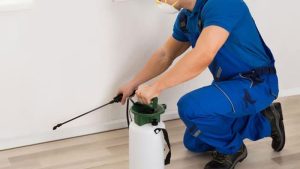
Professional exterminators typically combine several techniques into one comprehensive treatment. They'll usually start with a thorough inspection to gauge the scale of the infestation, then place glue traps in the areas they identify as the most active hotspots. To actually knock down the roach population, they'll typically apply poisoned bait, and in some cases they'll also treat the perimeter of your home to help keep new cockroaches from wandering in from outside. Some exterminators also bring specialized vacuum equipment to physically remove roaches, droppings, and egg cases in a single pass.
Because most people would rather not deal with a roach problem hands-on, professional pest control services remain popular for exactly this reason. DIY efforts can absolutely work, especially for smaller or early-stage infestations, but for anything more established, handing the job to professionals is often simply the more reliable path.
Now that you know the range of options available for handling a cockroach infestation, whichever method you choose, stick with it consistently — that's usually what makes the real difference between a quick fix and a problem that keeps coming back.
REFERENCES
https://www.aspca.org/
https://cockroachfacts.com/