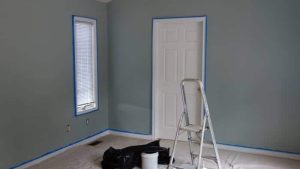
You've just repainted your walls, and despite the protective tarp, some paint ended up on your floor — and even worse, it's already dried. Don't panic. There are reliable ways to remove paint stains from just about any type of flooring or surface you have.
In this guide
- How to Remove Dried Paint From a Floor
- How to Remove Dried Paint From Floor Tiles
- How to Remove Dried Paint From Floorboards
- How to Remove Dried Paint From Hardwood Floors
- How to Remove Dried Paint From Vinyl Flooring
- How to Remove Dried Paint From a Concrete Floor
- How to Remove Dried Paint From Brick
- How to Remove Dried Paint From Vinyl Siding
- How to Remove Dried Paint From Laminate Flooring
- How to Remove Old Paint From Kitchen Cabinets
- How to Remove Dried Paint From a Mirror
- How to Remove Dried Paint From Baseboards
How to Remove Dried Paint From a Floor
It's genuinely common for a floor, piece of furniture, or nearby wall to catch some accidental splatter during a painting project. The right cleaning approach depends on both the type of paint involved and the specific surface it landed on. Here are some effective general tips for removing paint stains from flooring.
Remove paint stains based on paint type
The methods below generally work across most flooring types, though some specific surfaces call for their own tailored approach, covered further down.
Removing water-based paint stains
Water-based paint stains are among the easiest to remove, even once fully dry, largely because this type of paint doesn't bond as aggressively to a surface as some other paint types. Here's how to remove one:
- Soak a clean, dry cloth in rubbing (isopropyl) alcohol.
- Dab the cloth directly onto the stain.
- Let it sit for about an hour.
- Rinse the area thoroughly with clean water.
- Repeat if any residue remains.
Removing oil-based paint stains
Oil-based paint stains are considerably more stubborn to remove than water-based ones, since this type of paint bonds tightly to a floor almost immediately. Even so, it can be removed:
- Apply a small amount of turpentine directly to the stain.
- Let it sit for at least an hour.
- Once the paint has softened, gently scrub the area with soap.
- Rinse thoroughly with clean water.
Removing acrylic paint stains
Cleaning dried acrylic paint depends heavily on how thick and how old the stain is.
For recent stains:
- Pour boiling water directly onto the stain.
- Scrub vigorously with soap.
- Rinse thoroughly with clean water.
For older, set-in stains:
- Apply rubbing alcohol to the stain.
- Let it sit until the stain visibly breaks down.
- Rinse thoroughly with clean water.
Removing oil-based enamel (alkyd) paint stains
Oil-based enamel paint (sometimes labeled "alkyd" on the can) is known for bonding especially well to almost any surface, which makes it particularly stubborn to remove. It's not impossible, though:
- Combine equal parts white vinegar and mineral spirits (white spirit) — the two won't blend into a fully uniform mixture, so agitate them together right before use.
- Soak a clean, dry cloth in the mixture.
- Let it sit on the stain for about 30 minutes.
- Rinse thoroughly with clean water.
If leftover residue is especially stubborn, heat can genuinely help loosen it — pouring boiling water directly over the stain is often surprisingly effective.
It's also worth knowing that gently scraping a stain first tends to let any cleaning solution you use afterward penetrate more effectively, and dedicated paint solvents are genuinely useful against the most stubborn residue as well.
How to Remove Dried Paint From Floor Tiles
First and foremost, it's worth cleaning up a paint stain as soon as you notice it — ideally by wiping it up before it ever has a chance to dry, which is always far easier than dealing with it afterward. Once paint has fully dried, though, you'll typically need a stronger product to make the stain disappear.
Before you start with any stronger product, always test it first on an inconspicuous corner of tile to make sure it won't discolor your specific flooring.
Since you're dealing with paint that's already dried, using a plastic or rubber floor scraper blade first lets you lift off a good amount of the paint before you even get to cleaning the remaining residue. From there, try any of these approaches:
- A commercial paint-dissolving product or dedicated paint remover is an easy option, since these are widely available at any hardware store and are formulated to break down many different paint types.
- Dried paint can also be softened and removed using a solvent like mineral spirits, which works to dilute and loosen the paint film.
- A commercial paint-stripping gel or paste, available at most home improvement stores, is another option — but test it first in a hidden spot to rule out discoloration, and check with a specialty flooring store too, since they sometimes carry stronger, tile-specific products.
- For acrylic paint specifically, a thorough cleaning with a heavy-duty all-purpose household cleaner can help lift the stain from your flooring.
- Acetone is also well documented as effective on tile, so it's worth trying if other methods haven't fully worked.
- A powerful, tile-specialized cleaning product (available at most hardware or big-box stores) is another solid option worth trying.
Whichever product you choose, spray or apply it directly onto the stain, let it sit for about half an hour, then use a damp sponge to wipe away the loosened paint residue.
How to Remove Dried Paint From Floorboards
If your floorboards have picked up a stain from water-based paint (acrylic, gouache, or watercolor, for example), cleaning it up will be genuinely easy, since water-based paints don't bond as aggressively and are far less likely to cause lasting damage.
The paint will typically lift right off with a soapy cleaner, like dishwashing liquid diluted in water. Here's how:
- Add a few drops of dishwashing liquid, or a water-and-soap mixture, to a cloth.
- Moisten the entire stained area with the cloth.
- Rub in a back-and-forth motion for several minutes.
- Wipe the area dry with a clean cloth. If any residue remains, repeat the whole process from the start.
For any remaining residue, use a blunt, non-metal tool held at a shallow angle with light pressure to gently lift it away. A wooden spatula, a small spoon, or even an old credit or loyalty card all work well for this — avoid a metal, knife-like tool, since it can scratch the floor's finish.
For oil-based or alkyd enamel paint stains: unlike water-based paint, these are considerably harder to remove and generally only come off with a purpose-made solvent, like mineral spirits, turpentine, or acetone. Here's how to tackle this type of stain on floorboards specifically:
- Let the paint stain fully dry first.
- Scrape it off using a tool that won't damage the floor's finish.
- Scrape gently, taking care not to alter the wood's surface finish in the process.
- As with water-based paint, a wooden spoon, spatula, or old credit card all work well here too.
- Clean any remaining residue with a solvent matched to the specific paint type involved. Pour a small amount onto a soft cloth and rub gently rather than applying it directly to the floor.
How to Remove Dried Paint From Hardwood Floors
The right technique for removing paint from hardwood depends on the type of paint involved.
For water-based or acrylic paint stains:
- Rub the stain with a cloth dampened in soapy water.
- Wipe the area dry with a clean cloth.
- Apply a small amount of linseed oil afterward to help restore the wood's natural shine.
For oil-based or alkyd enamel paint stains:
- Gently scrape the surface of the paint using a wooden spatula.
- Rub the area with a cloth dampened in soapy water.
- If soapy water alone doesn't cut it, use a cloth with a small amount of mineral spirits or a commercial oven cleaner instead.
- Rinse lightly with clean water.
- Let the area air dry.
One important distinction: water-based paint stains on a painted or varnished hardwood floor can generally be treated right away, while oil-based paint stains should be left to dry completely before you attempt to clean them, so the paint doesn't smear or spread further across the surface.
How to Remove Dried Paint From Vinyl Flooring
- Start by trying to lift the stain with a craft knife blade, held at a shallow angle to avoid gouging the vinyl.
- If the stain is fairly recent, rub it with a sponge soaked in ammonia (ventilate the room well, wear protective gloves, and discard the sponge afterward rather than reusing it).
- Rinse the area thoroughly.
- Dry it with a clean cloth.
- If the stain is especially stubborn, repeat the process using mineral spirits instead, taking the same safety precautions.
How to Remove Dried Paint From a Concrete Floor
- Thoroughly clean the concrete surface and let it dry completely.
- Scrape off any paint that's already peeling or crumbling.
- Apply a concrete-safe paint stripper and let it sit according to the product's instructions.
- Remove the stripper residue once it's done its work.
- Reapply if any paint residue remains.
How to Remove Dried Paint From Brick
For terracotta or brick surfaces, a mop soaked in a dedicated floor-cleaning solution, followed by a thorough rinse, is often all it takes. Depending on the specific type of paint stain, here are the most effective approaches:
Oil-based paint stains:
- Rub the stain with a cloth soaked in acetone, using small circular motions.
- Sponge the area clean.
- Let it air dry.
Water-based (acrylic) paint stains:
To remove a water-based paint stain from a brick wall:
- Apply rubbing alcohol to the stain using a cotton swab or cloth.
- Sponge the area clean.
- Blot with an absorbent cloth to remove any remaining moisture.
How to Remove Dried Paint From Vinyl Siding
Because it's plastic, vinyl siding is genuinely one of the more straightforward surfaces to clean. To remove dried paint from vinyl siding, mix up a thick paste using cornstarch and hot water, and apply it directly to the stain.
Leave the paste in place for about half an hour, then wipe the surface clean — the paint stain should lift away completely.
How to Remove Dried Paint From Laminate Flooring
Laminate is a somewhat delicate flooring material and calls for its own careful approach. In these cases, it's best to address a paint stain as quickly as possible after it happens.
- Rub the area with a clean rag, pad, or paper towel to lift off as much paint as possible first.
- Continue cleaning with a mop and a general household cleaner.
If the stain persists after that, try a targeted product instead: apply a small amount of acetone or mineral spirits to a cloth and rub gently. Be careful, though, not to let any product seep into the seams of your laminate floor, since moisture or solvent trapped in those joints can cause the boards to swell or warp.
How to Remove Old Paint From Kitchen Cabinets
- Let the paint stain dry completely first.
- Remove the top layer of paint using a fine, flexible putty knife or spatula.
- Soak the wood with a solvent suited to the paint type and let it sit for a few minutes.
- Dab with a clean terry cloth towel to lift away as much paint as possible.
- Repeat the process until all the paint has been cleared from the wood grain.
- Rinse with lightly soapy water, taking care not to oversaturate the wood.
- Dab dry again with a fresh terry cloth towel.
How to Remove Dried Paint From a Mirror
Whether you're dealing with water-based, oil-based, or acrylic paint, removing it from a mirror takes some care, since the mirrored surface can scratch or damage easily. Here are a few reliable ways to clear paint residue off a mirror.
Using acetone:
- Soak a cloth in acetone or nail polish remover.
- Apply the cloth directly to the paint stain.
- Clean the glass as usual afterward with a standard glass cleaner.
Using rubbing alcohol:
- Spray rubbing alcohol directly onto the paint stain.
- Let it sit for a few seconds.
- Gently rub with a soft, non-abrasive sponge until the stain lifts away.
Using white vinegar:
- Warm white vinegar gently for about 5 minutes.
- Apply the warm vinegar to a cloth.
- Dab the stain with the cloth.
- Let it sit for about 10 minutes to work into the stain.
- Wipe the area clean with a damp cloth.
For stubborn, old, fully dried paint stains on glass, here's an alternative approach:
- Run a sponge with a little dishwashing liquid over the glass first to help protect it from scratching.
- Scrape the stain using a razor blade in a single direction, avoiding a back-and-forth sawing motion that could scratch the glass.
Avoid using paint thinner on a mirror, since it risks leaving the glass permanently clouded or opaque in that spot.
How to Remove Dried Paint From Baseboards
Gently scrape the dried paint away using a wooden spatula, then remove any remaining residue with a cloth dampened in mineral spirits (white spirit).